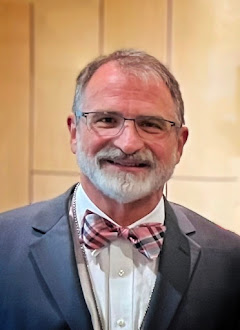
Wednesday, June 29, 2011

Acts of God
Acts 2:1-12[1]
Over the last several months we’ve all witnessed a wide variety of events in our world that we tend to categorize as “Acts of God.” “Acts of God” include things like hurricanes, tornadoes, floods, earthquakes, tsunamis, and volcanic eruptions. At one time, the phrase would have made sense, because most people probably didn’t understand the natural causes for catastrophic events. When the Vesuvius exploded and destroyed the ancient Roman city of Pompeii, it had to be an “Act of God” because people didn’t understand the forces of geology. When an earthquake destroyed the medieval city of Lisbon in Portugal, it had to be an “Act of God” because people had no idea about the movement of tectonic plates.
In our world, most of us are familiar with the phrase “Acts of God” because insurance companies use it to describe any number of natural disasters that they exclude from your coverage. But nobody—well, perhaps I should say almost nobody—believes that these events come directly from God any more. We know that a hurricane occurs when a low pressure system hits warm water and starts spinning around. We know that a tornado is the product of warm air hitting cold air. We can basically explain the natural causes of all of these “Acts of God”—so that they really don’t seem to fit into the category of “Act of God” any more. In a very real sense, I think we could say that describes much of what has happened in our world. Much of what at one time would have been attributed to some mysterious or miraculous “act of God” now has a completely rational and natural explanation.
This shift even affected the way we practice our faith. One of the traits of the Reformed branch of the Christian family is an approach that is reasonable, seeking to explain all things spiritual in terms that everyone can understand and grasp. And so the sermon became the focus for Christian worship instead of the Communion table. In the Catholic Church, the whole point of the service is the mass, the miracle by which the material elements become Jesus’ own body and blood. It is a great mystery, not to be explained, but to be experienced. In the Reformed churches, however, the sermon became central to worship, because the point of worship is to explain all things related to faith. And yet, the audacity that presumes we can explain everything—even matters that the wisest of sages would recognize belong firmly in the realm of mystery—leaves little room for wonder, for awe, for faith, and perhaps even for God.
In our lesson from Acts, which tells the story of the outpouring of the Spirit on the day of Pentecost, the response of the people who witnessed it was not one of calm, rational understanding, but rather they were “bewildered,” “amazed and astonished,” and “perplexed” (Acts 2:6 ,7, 12). This event, which I would consider a real “Act of God,” was beyond their ability to comprehend or explain. It left them in a state of confusion, as the lesson puts it: “All were amazed and perplexed, saying to one another, ‘What does this mean?’” (Acts 2:12).
Most of us don’t like what we can’t understand. We feel uncomfortable with confusion. And so someone may object that the story goes on to tell us that what Peter did was precisely to “explain” this event. And you may also insist that the “miracle” of Pentecost was that the language of the Apostles was fully intelligible to people of many different dialects. I wonder if part of the problem with our churches today is that we insist on keeping God firmly within the box of what we can understand and explain. But surely we don’t want a God who keeps everything nicely and neatly in the realm of what we can explain over Sunday School refreshments? What kind of a faith is that? How in the world does that motivate us to live for the peace and justice and freedom of God’s realm in a world that is so unfree and unjust?
None of our attempts at rational explanation can change the fact that the event of Pentecost itself is something astonishing.[2] And so it seems to me that one of the lessons of Pentecost is that when “God happens,” it will be something astonishing, like Pentecost itself.[3] If we want to see some genuine “Acts of God” in our midst, we need to be prepared for some amazement, some confusion. If we want our faith to be something living, if we want our church to be alive with the power of the Spirit, we have to expect that it will only happen to the extent that the God of Pentecost comes to us and shakes things up and blows things around.[4]


[1] © 2011 Alan Brehm. A sermon preached by Rev. Dr. Alan Brehm on 6/12/11 at First Presbyterian Church, Dickinson, TX and at A Community of the Servant-Savior Presbyterian Church, Houston, TX.
[2] Cf. Beverly Roberts Gaventa, “Unruly Spirit,” The Christian Century 110 no 16 (May 12, 1993): 515: “If the speech that comes forth from believers is intelligible, it is simultaneously incredible.” She goes on to observe that we tend to want to tame the “unruly Spirit” of Pentecost by either individualizing it or institutionalizing it.
[3] Cf. Jim Callaghan, “Windblown,” The Christian Century 117 no 17 (May 24-31 2000): 597.
[4] Cf. Leonora Tubbs Tisdale, “The Wind that Blows the Doors Off,” Journal for Preachers 26 no 4 (Pentecost 2003): 56, where she says, “This wild Spirit wind of God … toppled all human understandings of who is in and who is out, who is clean and who is unclean, who is worthy to proclaim the Gospel and who is not. … because of this wind, everyone in that room who thought they had God all figured out and safely circumscribed in their neat and orderly theological boxes, saw the doors of those boxes completely blown off.”
Recovering Hope
Acts 2:42-47; Psalm 23[1]
During this season of Holy Week and Easter, we’ve been examining the fact that faith is not easy. We’ve been talking about how we have some challenges with our faith. I think one of the most difficult challenges we all face is that at some point in our lives we find the very clear, simple and confident faith of our childhood shattered. All of us have had the experience of saying “I had hoped …” with greater or lesser degrees of despair and perhaps even anger. Life is such that just about all of our hopes are at some point dashed. They wind up like “sweet dreams and flying machines in pieces on the ground”[2]!
This is perhaps one of the greatest obstacles to faith. Once our hopes have been dashed, what do we do? Once the faith of our childhood is shattered, how do we move forward into a new faith? I think the same thing we said last week applies here as well—just as when we’re learning faith for the first time, re-learning faith in a whole new way is a matter of learning by doing. When we are children, we cultivate faith by participating in worship, by learning the prayers and singing the hymns.[3] I think that applies to re-learning faith as well. We cultivate a new faith as we participate in worship, learning to say the prayers in whole new ways, learning to sing the hymns with a whole new meaning, learning to confess our faith with new substance behind the words. Worshipping with the community of faith is where we learn faith in the first place; it’s also where we re-learn faith after our hopes have been shattered.
At this point you might be scratching your head. You might be thinking that when you’ve lost your faith, the last place you want to be is in church, saying the same prayers that have lost their punch, singing the same hymns that have lost their meaning. And yet, even though a worship service is the last place you’d like to be, it is still the place to re-learn faith. In worship we’re essentially learning how to make all of our lives a believing and faithful response to God’s gift of grace and mercy and peace and joy and love and life to us all. [4]
I’m not saying it will be easy or that it will come quickly or that it won’t be frustrating. Losing faith and trying to get it back again is probably one of the most trying experiences anyone can go through. You feel very much as if God has abandoned you and you find yourself wondering what you did wrong, or why God won’t help you, or even if there is a God at all. Re-learning faith after we’ve lost the faith of our childhood can be one of the most difficult and painful experiences in life. But the plain truth is that the only way to re-learn faith, the only way to recover shattered hopes, is to go back to the place where you learned faith in the first place, and keep going through the motions until the breakthrough comes.
Where else do we have the opportunity to pray the prayer our Savior taught us, looking for God to bring peace and justice into this world? Where else do we have the opportunity to sing the words of faith in the hymns of our childhood? Where else can we experience the sacraments, which remind us of the grace of God, the love of Christ, and the fellowship of the Spirit in our daily lives? In fact, I would maintain that the sacraments may be one of the most important means of re-learning our faith. As “signs and seals” of what God is doing in this world, they both proclaim the gospel to us, and they also serve as a means of experiencing the grace of God and the presence of Christ again and again.[5] This is especially true of the Lord’s Supper. In Communion we experience God’s sustaining grace—leading us beside still waters, making us lie down in green pastures, restoring our souls.[6] When we come to the table of our Savior, we experience in a way that is like no other the presence of the risen and living Christ.[7] It is truly one of the high points of our worship.
In the previous context where I served, every worship service was supposed to end with an evangelistic invitation. While I understand that this came out of the revival tradition, I always felt frustrated with trying to find some logical or reasonable way to lead into a call to conversion, no matter what the topic of the sermon might have been. On the other hand, I never grow tired of inviting people to the table Christ has prepared for us. As we seek to recover shattered hopes, as we seek to re-learn faith in new ways, we come to the table and find the presence of the risen Savior. We find the gift of God’s unconditional acceptance, God’s sustaining grace, and God’s redeeming love. We come with our community of faith and draw our very life from the one who died for us. And we leave with our hope and faith renewed.


[1] © 2011 Alan Brehm. A sermon preached by Rev. Dr. Alan Brehm on 5/15/11 at First Presbyterian Church, Dickinson, TX and at A Community of the Servant-Savior Presbyterian Church, Houston, TX.
[2] James Taylor, “Fire and Rain” from Sweet Baby James, Warner Brothers, 1970.
[3] Guthrie, Christian Doctrine, 325: “Faith in God is only possible when we live by faith.”
[4] Book of Order W-1.1001; cf. Karl Barth, Epistle to the Romans, 426-36. Jürgen Moltmann, The Church in the Power of the Spirit, 109, says that new life in Christ is to be “celebrated as the feast of freedom, as joy in existence and as the ecstasy of bliss.”
[5] Cf. The Study Catechism, question 69: “add water, or bread and wine, to the word of promise, and it becomes a visible word. In this form it does what by grace the word always does: it brings the salvation it promises, and conveys to faith the real presence of our Lord Jesus Christ.” Cf. John Calvin, Institutes of the Christian Religion 4.14.17.
[6] In the Lord’s supper, Christ may be said to “feed” us—that is he confirms and nurtures our faith, and he renews and sustains us in our service (W.2.4004).
[7] This is the distinctive Reformed view of the sacrament; cf. Weber, Foundations II:618.

Tuesday, May 10, 2011

It Takes A Village
Luke 24:33-35[1]
Some years ago, Hillary Clinton captured our attention with a book entitled “It takes a Village.” Her premise was a simple one—generations of people from all races and cultures and languages have recognized that it takes more than the “nuclear family” in order to raise children. It takes a village. Although the book generated some controversy, it seems to me that every parent knows what she was talking about—without an extended family, without the support system of schools and churches and scout groups and sports teams and neighbors, it is nearly impossible to raise a child.
We in the reformed church have incorporated this perspective into the way we raise our children in the faith. Parents present their children for baptism, promising to raise them in the community of faith. And in turn, the community of faith promises to embrace these children and to play a supporting role in their nurture, guidance, and instruction. In fact, this has been a central feature of what it means to be the community of faith for generations—we know that it takes a village to raise children in the faith.
So why would we think it would be any different in our own faith journey? All of us continue to develop our faith long after childhood. Life doesn’t stay in one place, which means that the faith we had as children must grow stronger in order to meet the times of testing and trial that come to us all. The fact of the matter is, we are all continually developing in our faith. And yet, because we live in a culture that values self-sufficiency and independence, we tend to approach our faith journey as if we’re essentially on our own. We seem to think that we either can or should keep our faith struggles, our questions and doubts, our uncertainties and even confusion to ourselves. To me it’s the equivalent of throwing children out on the street to fend for themselves after they turn 13!
The reality is that faith has always been a community endeavor. From the very beginning, we find the early Christians gathering together to share with each other the bewildering experiences they have had with the risen Christ. I find it interesting that a common theme in the stories about the disciples discovering that Jesus was alive is that they immediately went back to the rest of the group to tell the others what had happened. It’s one thing for them to race from Golgotha to the upper room in Jerusalem. It’s another thing altogether for the disciples on the road to Emmaus to run 7 miles back to share the good news with the others. Notice that the Gospel reading for today says that “That same hour they got up and returned to Jerusalem” (Luke 24:33). Anybody up for a late night 10k? When they got there, they found “the eleven” were saying that Jesus was risen. And they in turn shared what had happened to them. The cumulative effect is that in the sharing they were supporting and encouraging and strengthening each other’s faith! As one contemporary prophet puts it, “The resurrection is not a fact to be believed, but an experience to be shared.”[2]
I think this is true of all of our faith. It simply is not something that can flourish in a context where we think we have to be spiritual “lone rangers.” Faith flourishes in a community. There is something about faith that it needs to be carried out “ in the presence of all God’s people” (Psalm 116:14) in order to thrive. I like the way Henri Nouwen puts it:
“Christian community is the place where we keep the flame of hope alive among us … . That is how we dare to say that God is a God of love when we see death and destruction and agony all around us. We say it together. We affirm it in each other.”[3]
It takes a village for us to make the journey of faith if for no other reason than it takes human flesh and blood to translate the truths of our faith into new life. Our faith is simply too theoretical for people of our day and time to embrace unless there is someone there to demonstrate them in action in the real world. One of our confessions puts it this way: “The new life takes shape in a community in which people know that God loves and accepts them in spite of what they are. They therefore accept themselves and love others, knowing that no one has any ground on which to stand, except God’s grace.”[4]
Faith is not easy. We’ve been talking about how we as people of the 21st century have some challenges with our faith. Just as in every other aspect of human development, it takes a village for us to sustain a thriving and growing faith. It takes a community to hold on to the faith that God is working to bring grace and peace and mercy and love and life to every life in the midst of all the suffering and heartbreak and cruelty and hypocrisy of this world.[5] Our experience of life in this world is such that we always have to keep learning what it means to have faith. That doesn’t typically happen well when we try to go it alone. Faith is something that thrives and grows in the sharing. And that happens in the context of a village—a community of faith. Our community serves as a kind of extended family for us in our faith. It’s our support system, encouraging and guiding and strengthening us as we take our journey of faith.


[1] © 2011 Alan Brehm. A sermon preached by Rev. Dr. Alan Brehm on 5/8/11 at First Presbyterian Church, Dickinson, TX and at A Community of the Servant-Savior Presbyterian Church, Houston, TX.
[2] Walter Wink, “Resonating With God’s Song,” The Christian Century (March 23, 1994).
[3] Henri Nouwen, Finding My Way Home, 105.
[4] The Confession of 1967, 9.22.
[5] Most of us have been in the place where we say with the disciples on the road to Emmaus “We had hoped ...” (Lk 24:21).

Saturday, May 07, 2011

Finding Faith
Jn. 20:19-31[1]
Faith is not easy. I think we can all agree that we as people of the 21st century have some challenges with our faith. In the midst of our skeptical world that demands proof for just about everything, faith is something inward, subjective, mystical and mysterious; it is something impossible to get a firm grip on faith.[2] As a result, it can easily seem like the life of faith leaves you feeling like you’re hanging in mid-air at the end of a rope and you have no idea what that rope is attached to![3] At the end of the day, how can we be certain about things like God and redemption, the afterlife and ultimate destiny? As the great Danish philosopher Søren Kierkegaard put it, for every proof there is some disproof”.[4] Faith is not easy.
And yet it would seem that, like the other Gospels, John’s account of the resurrection attempts to do just that. In our lesson for today we are told that the “signs” Jesus did are recorded here “so that you may come to believe that Jesus is the Messiah, the Son of God, and that through believing you may have life in his name” (Jn. 20:31). Unfortunately, that’s just restating our problem, isn’t it? For us as people of the 21st century, we are just not moved by the “signs” that moved people in the First century. Miraculous events simply don’t command the same kind of faith in us as they did for people of ancient times. But it’s not just a modern versus ancient problem. To a great extent, this problem of “verification” is built into our search for faith. If it’s faith, we can’t prove it, can we? And if we can prove it, where’s the need for faith? I guess that’s why many of us find our Gospel lesson for today so appealing. I think we tend to resonate with Thomas’ doubts. As people of our day, we don’t want a faith that consists of “wishful thinking” or “smoke and mirrors.”[5]
This problem gets a lot of attention when it comes to Easter and the resurrection. Even St. Paul recognized that “if Christ has not been raised, then our proclamation has been in vain and your faith has been in vain” (1 Cor. 15:14). It would seem that there is a lot riding on whether something actually happened on that first Easter Sunday. Somehow, if Easter was merely a symbol or a vision or some kind of spiritual experience that had no correspondence in this world, then the victory we proclaim over death seems less than real.[6] Without Easter, what is there to distinguish the death of this one Jewish man from the countless other deaths at the hands of cruel oppressors?[7]
While it does seem important that our faith rests on something more than wishful thinking, I’m afraid that all efforts at demonstrating exactly what that “something more” is fall short of being convincing. When it comes to faith, we just cannot present an airtight case that demands a verdict! [8] It’s just not the way faith works![9] At the end of the day, when we approach these matters solely with our intellect and our logic, it would seem that the doors to faith are permanently closed and locked shut.
So how do we find the faith to go out and live in light of the hope that God is working in this world to bring grace and mercy and peace and justice and love and joy and life to every life? Ironically, Easter gives us some help here. Or perhaps we might say that the risen Christ gives us some help. In some way that we simply will never be able to sufficiently explain or concretely prove, we continue to have the experience of the living Christ.[10] The same Jesus who surprised the first disciples huddled behind locked doors out of fear, also surprises us behind locked doors of doubt.[11]
Faith is not easy. The truth is that it never has been easy. In some respects, we only find faith by having faith. It’s very much like setting out on a journey without even knowing where you’re going, like Abraham and Sarah. But the question we face is how do we who seem to be so full of doubt set out on that journey? I would say that the answer is to pursue our doubts. It seems to me that genuine faith (1 Pet 1:7) always has generous helpings of doubt.[12] I think that if you are honest enough and courageous enough to face your doubts squarely, you will wind up with a faith that works for you. I think we’ve all seen through the myth that if you want to have faith you have to banish your doubts. Most of us have had the experience that pursuing our doubts proves to be the path to deeper faith. The questions raised by our doubts can provide the guidance and the motivation to set out on our journey of faith, even when we don’t understand what we’re doing, even when we don’t know where it will lead us.


[1] © 2011 Alan Brehm. A sermon preached by Rev. Dr. Alan Brehm on 5/1/11 at First Presbyterian Church, Dickinson, TX and at A Community of the Servant-Savior Presbyterian Church, Houston, TX.
[2] Cf. John Caputo, On Religion, 15 where he says, “To have a religious sense of life is to long with a restless heart for a reality beyond reality.”
[3] Cf. Karl Barth, Dogmatics 2.1:159, where he says that the life of faith involves a feeling of as if we are “suspended and hanging without ground under our feet.”
[4] See Charles E. Moore, ed., Provocations: Spiritual Writings of Kierkegaard, 256.
[5] Cf. Suzanne Guthrie, “Cousin Thomas (John 20:19-31),” The Christian Century (March 22, 2002): 10.
[6] Cf. G. C. Berkouwer, The Work of Christ, 190, 196-97.
[7] Cf. Emil Brunner, Dogmatics II:337: “Apart from the Resurrection Christ’s death on the cross is a catastrophe.”
[8] Even one so astute and erudite as Karl Barth failed (in my opinion) in his attempt to argue that the resurrection of Jesus was something that “actually happened among men like other events." Even he acknowledged that in this matter we are dealing with “comprehending the incomprehensible.” Karl Barth, Church Dogmatics 4.2.143-44.
[9] Ernst Haenchen, John 2, 211: “There is no verifying evidence (miracle!) by which we can be convinced of God’s reality with objective certainty.”
[10] As Kierkegaard also pointed out, despite all our questions and quandaries,  “Christ enters through locked doors.”
[11] Cf. Susan R. Andrews, “Jesus Appears,” The Christian Century (March 24-31, 1999): 341 : “The truth of Easter is that all of humanity is blessed with a God who defies the locks of logic and grief and prejudice and fear, a God who blesses us and then sends us, fresh and filled with hope, back into a hopeless world.”
[12] Cf. Caputo, On Religion, 33-34: “faith cannot be insulated from unbelief; it is co-constituted by unbelief, which is why faith is faith and not knowledge.”